A mood tracker journal for the whole moment
Some moments need a few words. Others need just a feeling. Keep both, and add what happened next when you’re ready.

Just a mood.
Energy, if you want.
Choose how you feel and save a mood check-in. Add low, moderate, or high energy when it helps describe the moment. Mood and energy are different: you can feel good and still feel tired. Leaving energy blank is always okay.
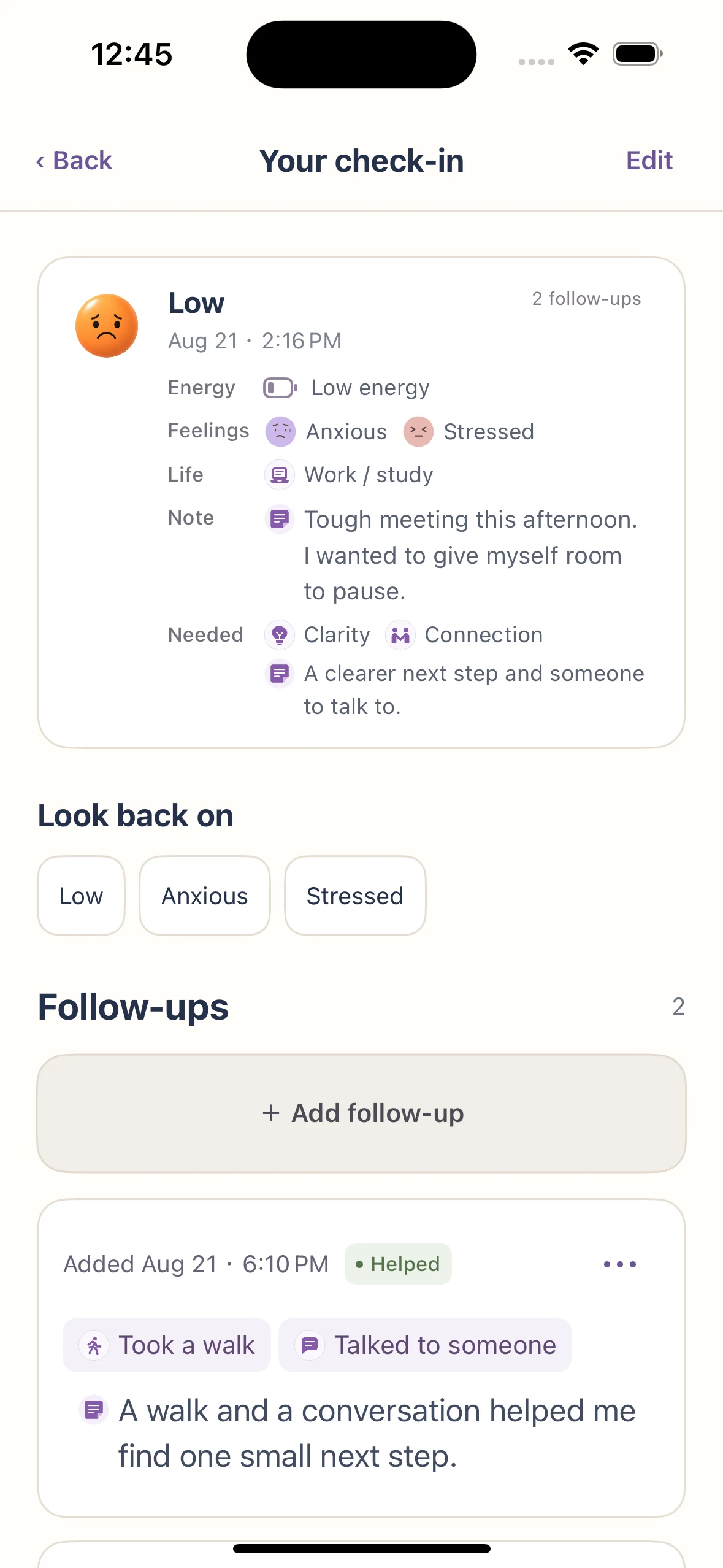
Go deeper:
feelings, life, needs.
Give the moment its context. Feelings name the emotion, Life captures what was happening, and Needs records what you needed. Choose the icons that fit, add a note if you like, and leave the rest blank.
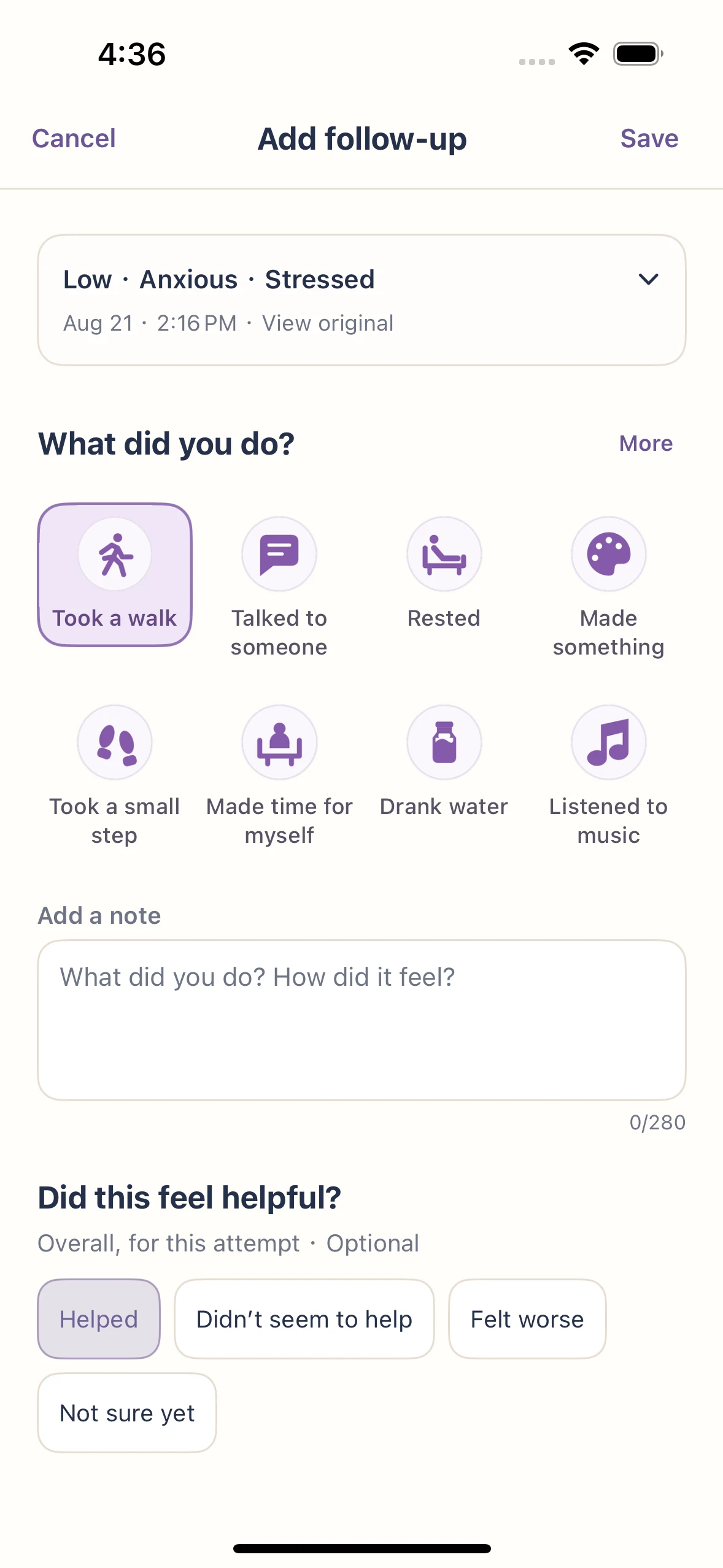
Come back to
what helped.
Later, open the check-in and add a Follow-up: what you tried, what happened, and any words you want to keep. Mark the experience “Helped” or “Didn’t seem to help,” or leave feedback blank. Over time, these notes help you remember what felt useful in a similar moment.
“Why do I feel
this way again?”
Your check-ins keep the details. Mood Charts help you notice the patterns. Open Look back to explore a recurring feeling, the life around it, and the follow-ups you marked helpful.
Find your patterns with Mood ChartsA little more
to know.
Do I need to complete every field?
No. Details are optional. A mood alone is a complete check-in.
Is this a paper journal?
KnowMood is a digital mood journal for iPhone and iPad.
Can I add something later?
Yes. Follow-ups keep later actions and reflections connected to the original check-in.
How is energy different from mood?
Mood describes how you feel. Energy describes how much energy you have. A good mood can come with low energy, so KnowMood records them separately.
What does Go deeper add?
Feelings, Life, and Needs give a check-in more context. All are optional, as are notes.
What does follow-up feedback mean?
Helped and Didn’t seem to help describe your overall follow-up experience. If you record several actions together, feedback does not rate each one separately.
How do I spot a recurring feeling?
Open Mood Charts and use Look back to choose a mood or feeling. Explore its context, time, energy, and original check-ins.
Keep exploring
Read: how to track your mood
Make room for
your next moment.
For iPhone and iPad