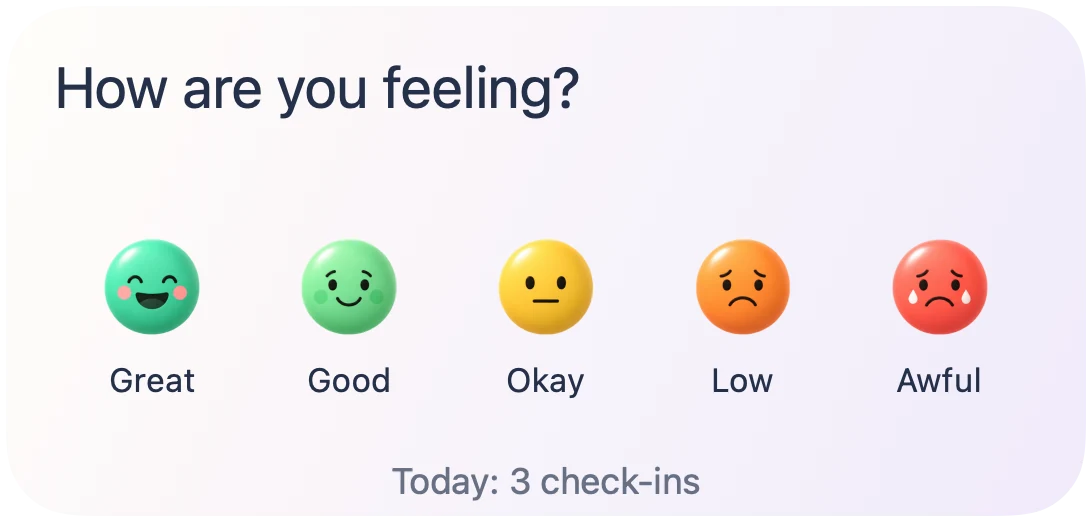
Quick Check-in
A shortcut to a new check-in, with a mood to start from.
Record a mood, add the context you want, and remember what helped. KnowMood connects your daily check-ins to patterns you can look back on.

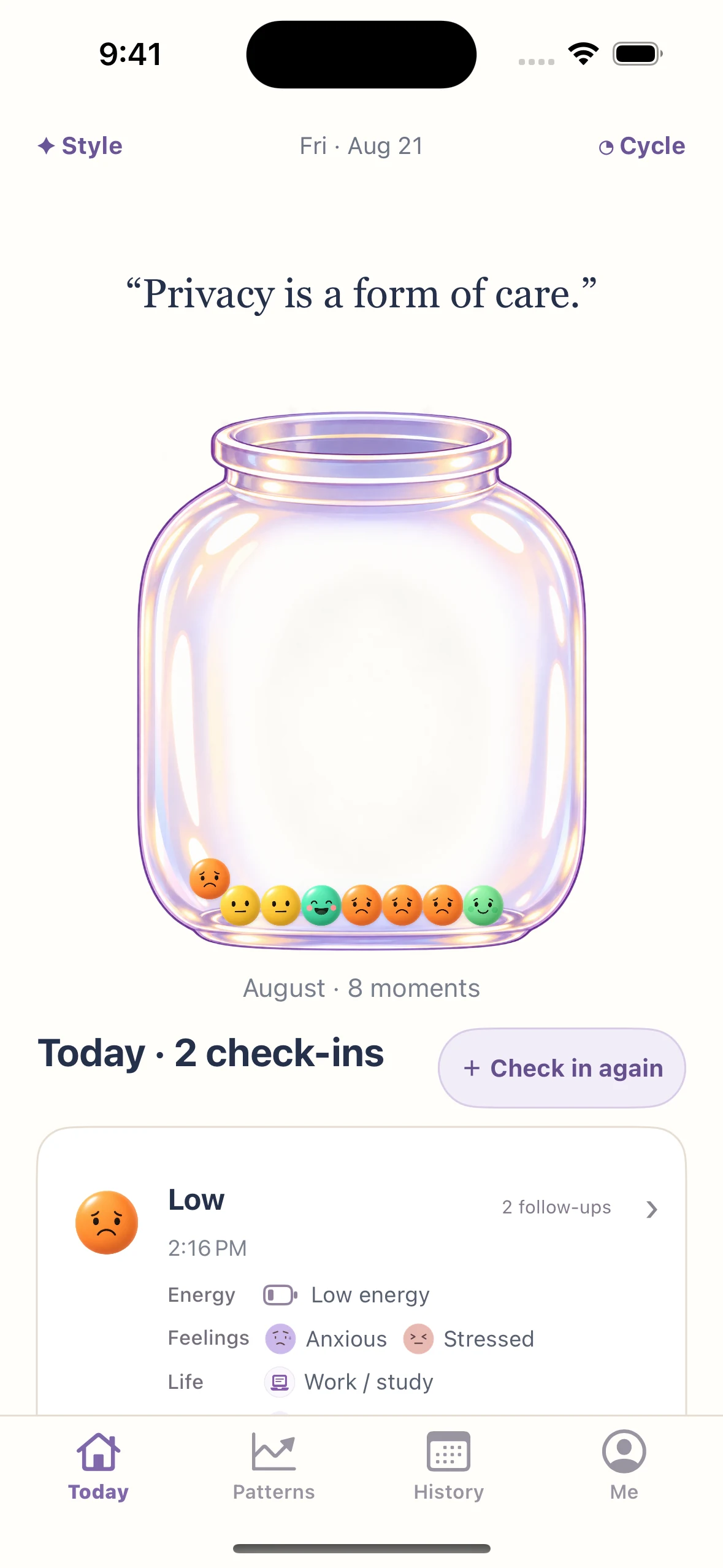

Go beyond good or bad.

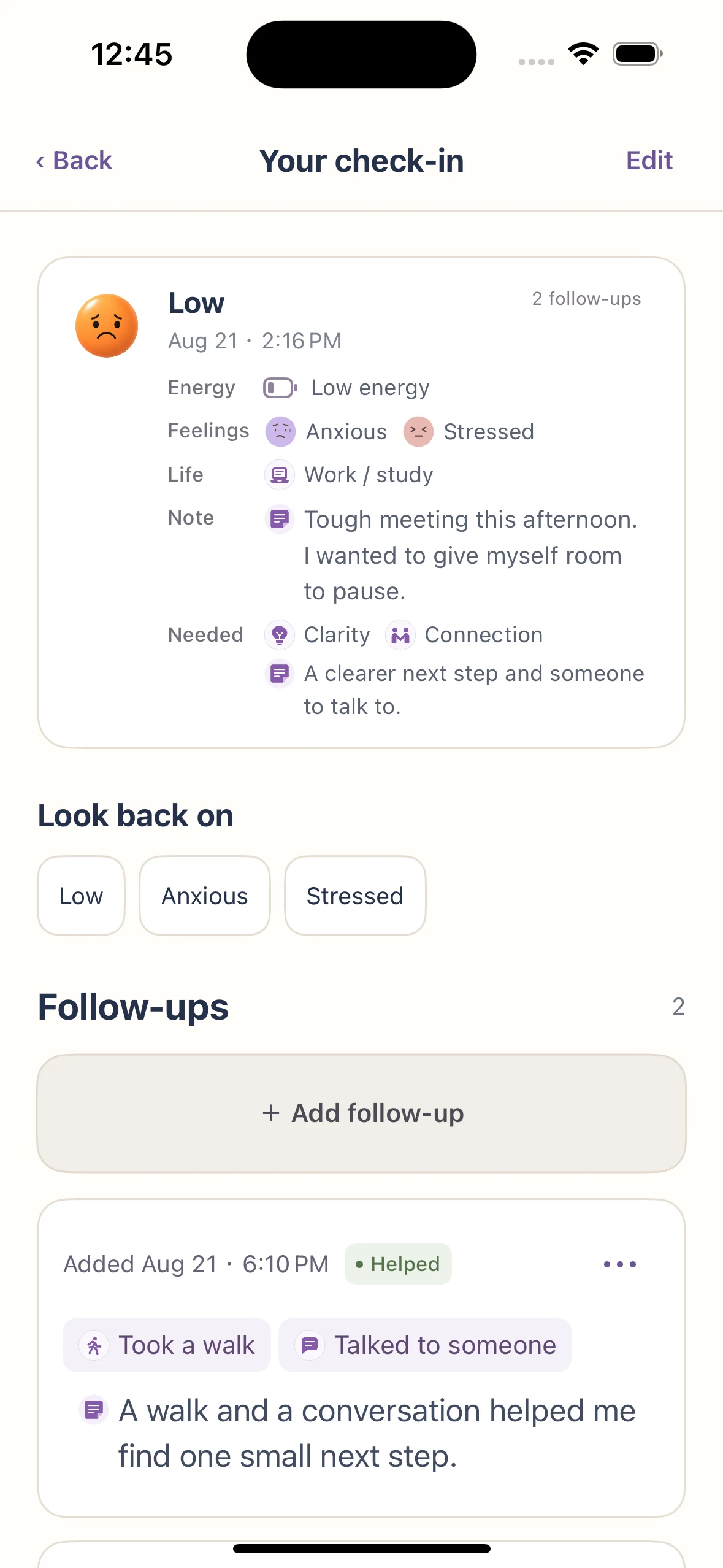
Remember what was happening.
Leave space for what you needed.

Keep later actions with the moment.
A quick check-in starts with your mood; energy is optional. Go deeper with Feelings, Life, and Needs to remember what was happening and what you needed.
Explore your mood journal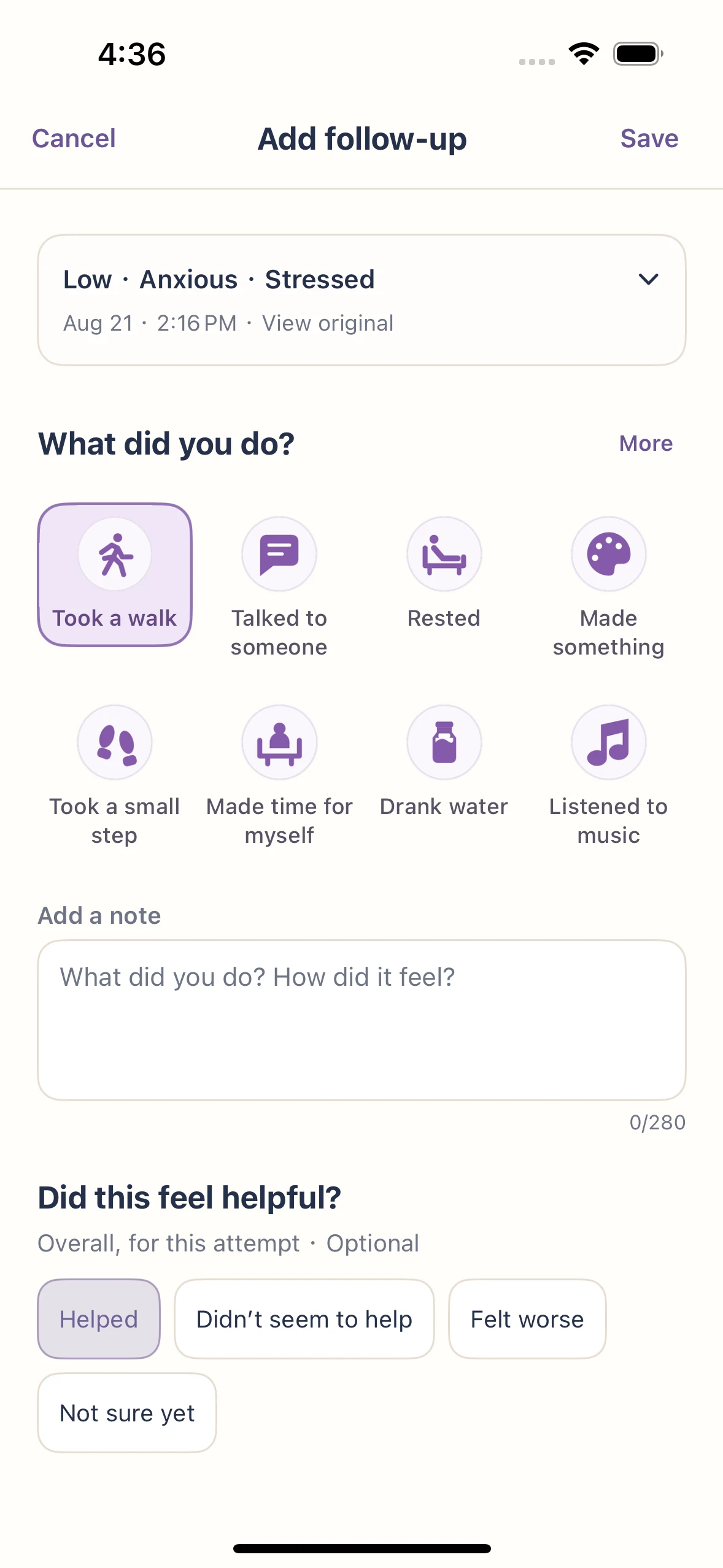
Add a Follow-up to the original check-in. Keep what you tried and mark the experience “Helped” or “Didn’t seem to help.” Look back makes it easier to find these moments when a feeling returns.
Explore follow-upsSee how you felt, how often, and what was happening around it.
Notice the stretches that felt lighter, harder, or more changeable. Mood Trend follows averages over time, so you can see a change in the bigger picture and return to the days behind it.
For a longer history, KnowMood groups daily averages into overview points. Missing records stay gaps.
Explore mood chartsOne difficult moment can stand out in your memory. Mood Mix puts every recorded mood beside the others, with counts and percentages for Great, Good, Okay, Low, and Awful.
Each check-in counts once. A day with several check-ins contributes more than a day with one.
Explore mood chartsCompare your average mood when you tagged sleep, work, time for yourself, or other parts of daily life. See which contexts are worth returning to in your journal.
The count beside each factor helps you judge how much history sits behind it. An average appears after at least three tagged check-ins; an association is not a cause.
Explore mood chartsCompare recorded moods across completed cycles, with a row for each cycle and an average across them. The colored cells make similarities and differences between stages easier to see.
Period dates come from your records. Other phases are estimates based on those dates, for personal reflection rather than medical or fertility guidance.
Explore mood chartsStart with a mood or feeling, then look at the life events, time of day, and energy recorded with it. Narrow the view and open the original check-ins to understand what those moments had in common.
Use Marked helpful to revisit records with follow-ups you found helpful. Your history can offer context and questions to explore, rather than a single explanation for a feeling.
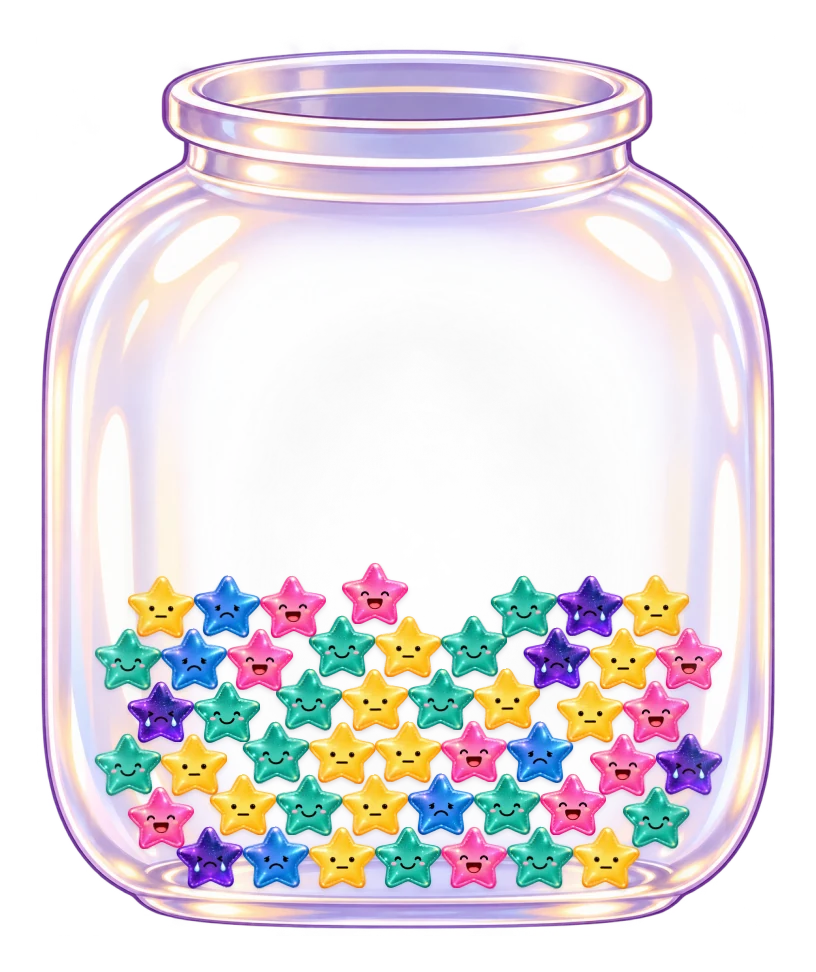
Explore mood chartsEvery check-in becomes a moment in your Mood Jar. Choose a style that makes it feel like yours.
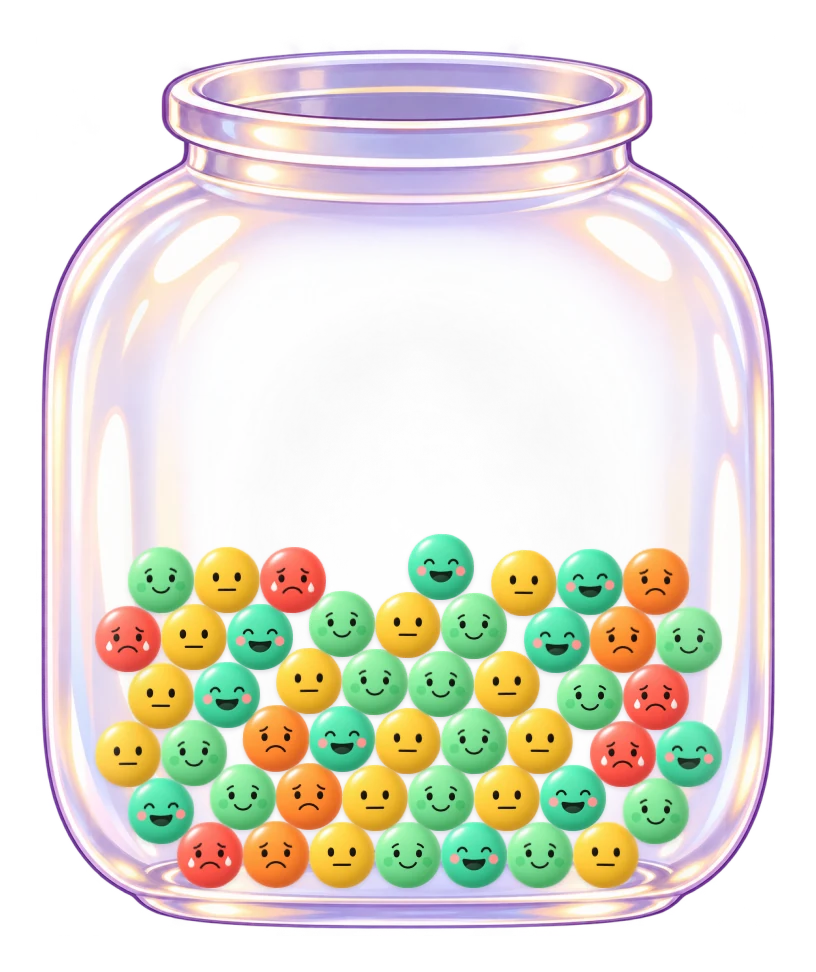
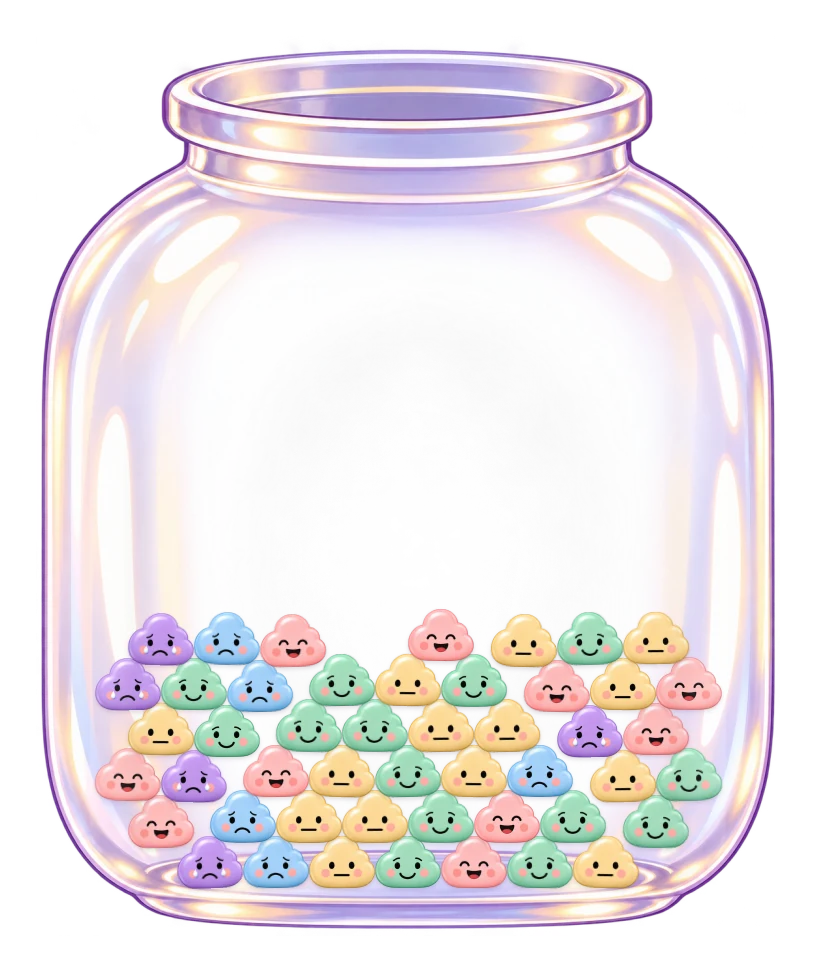
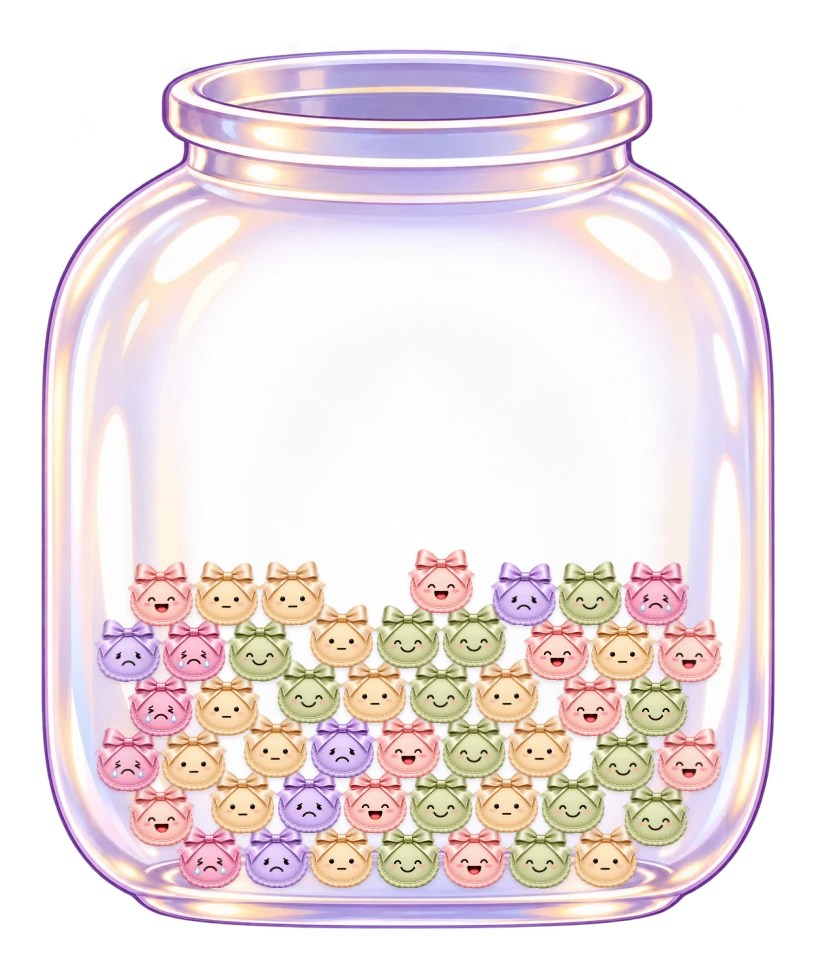
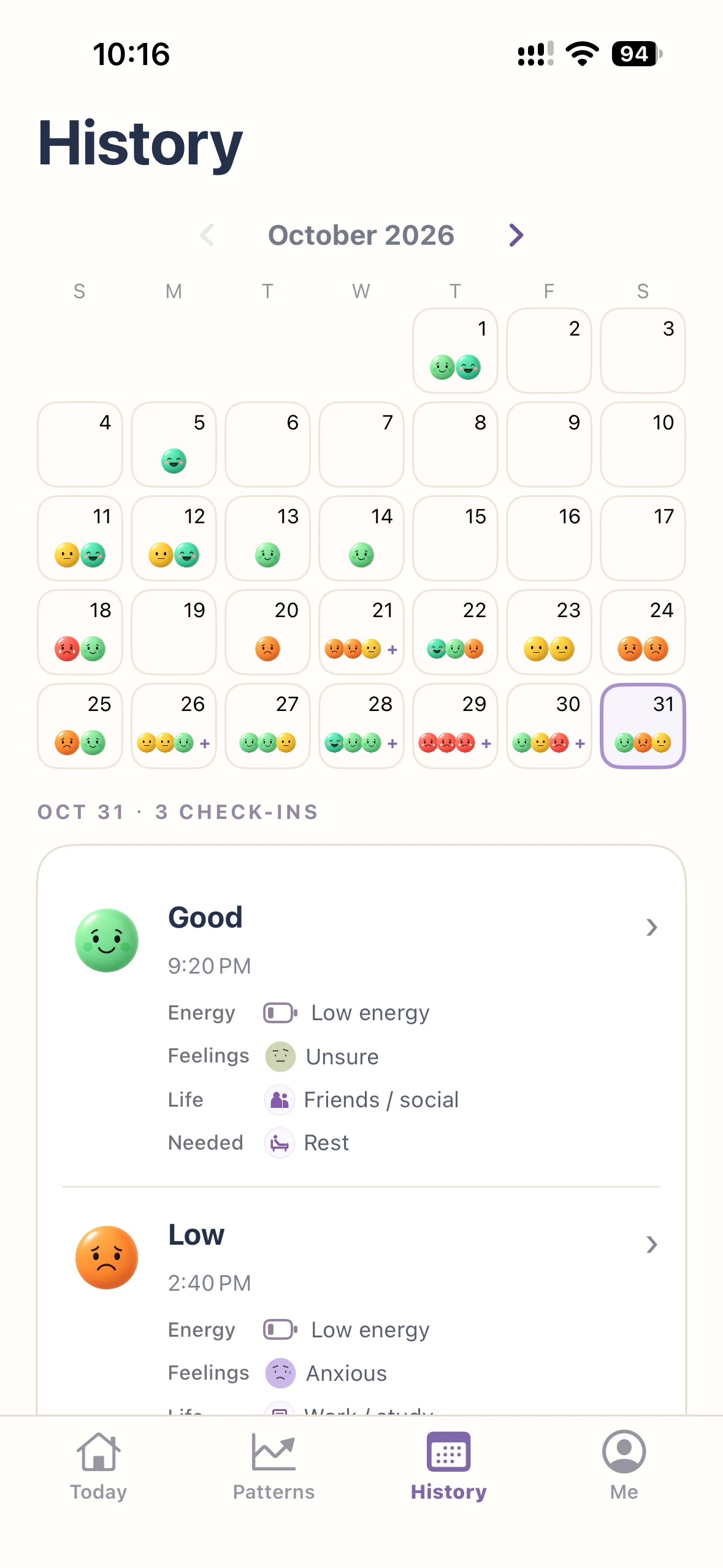
A date leads to its individual check-ins. Reopen a moment to see the feelings, context, and follow-ups you kept with it.
Explore your mood calendar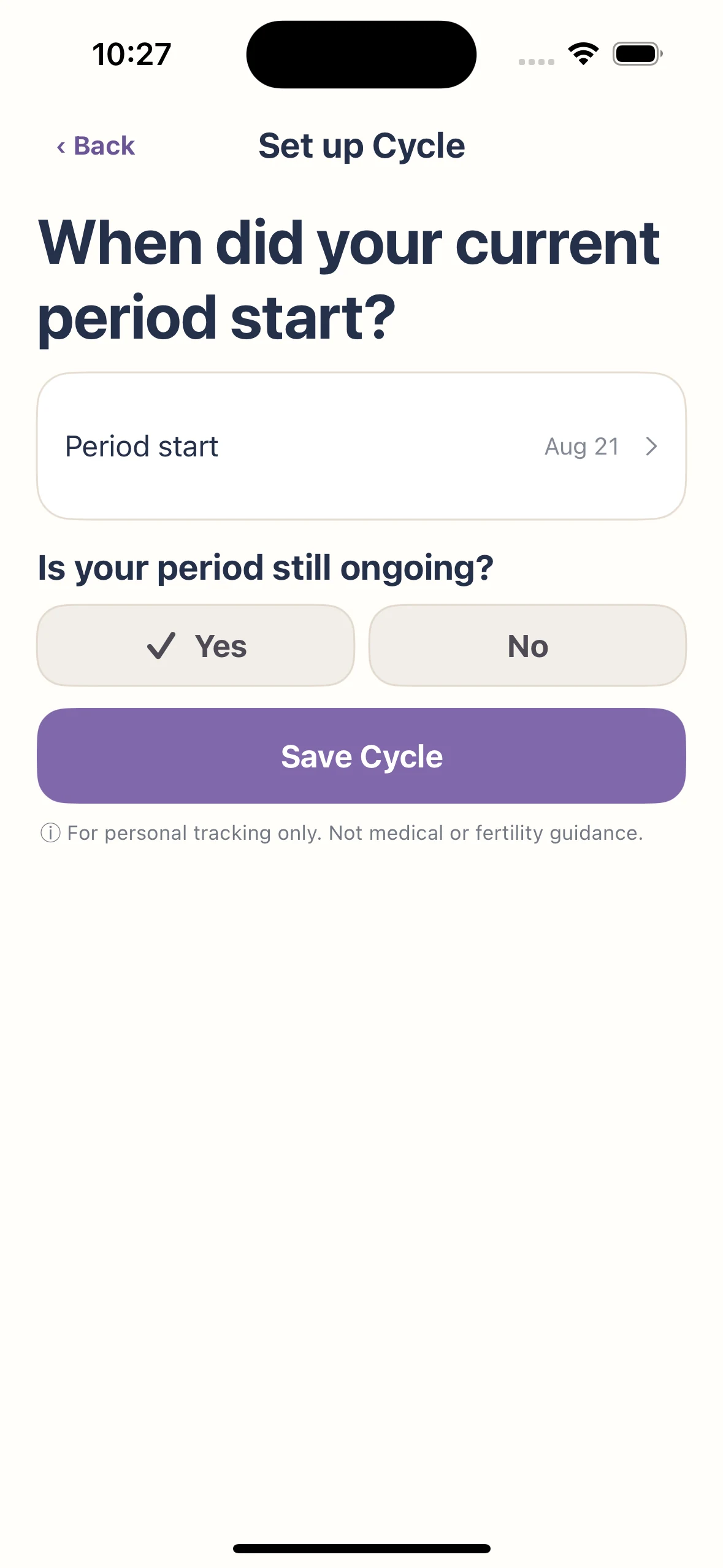
Start with your period dates in Cycle settings. Then use Mood × Cycle to compare recorded moods across completed cycles, alongside the rest of your life.
Explore cycle trackingA quick way in, a month at a glance, or a little encouragement.
A shortcut to a new check-in, with a mood to start from.
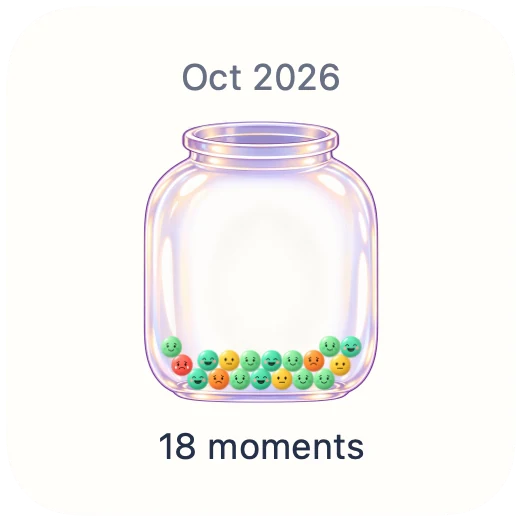
See your month’s recorded moments collect in one little jar.
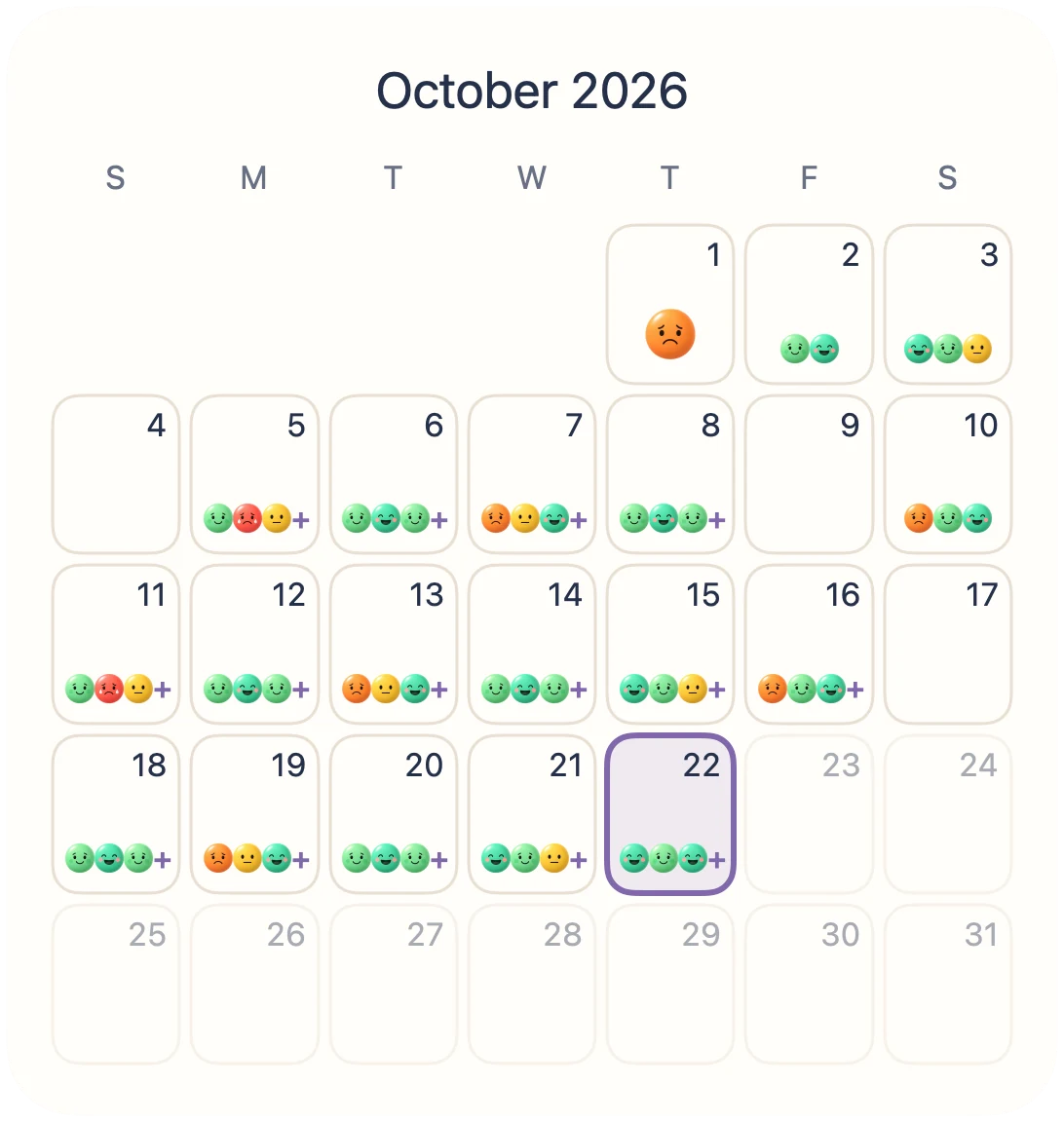
See your recorded days together and return to your history.
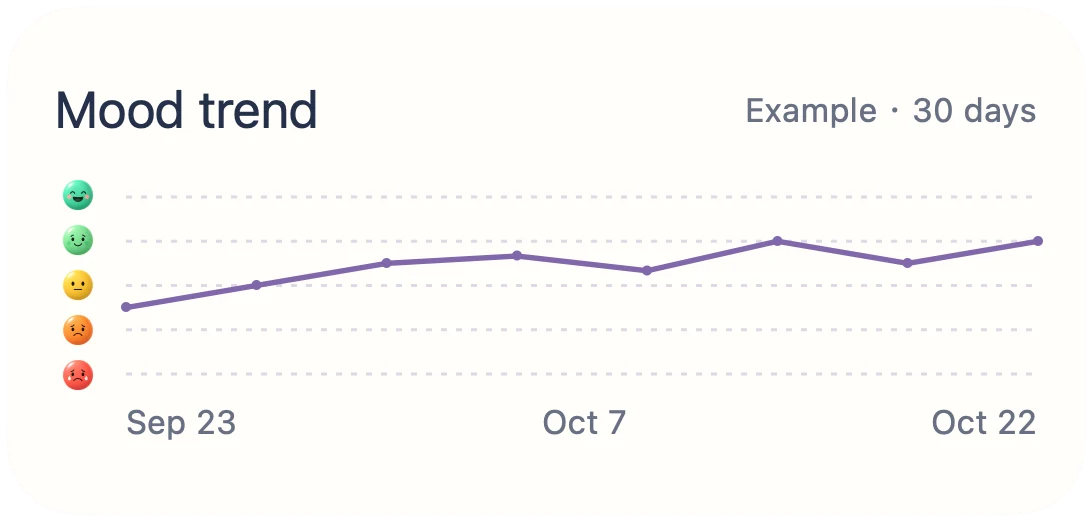
Keep the shape of your recent moods in view.
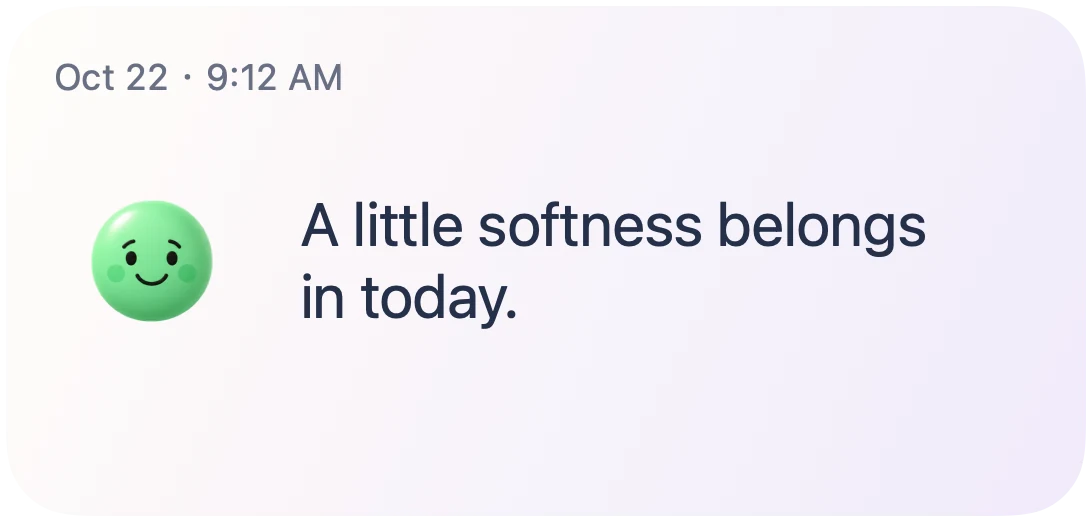
Make room for a gentle thought in the middle of your day.
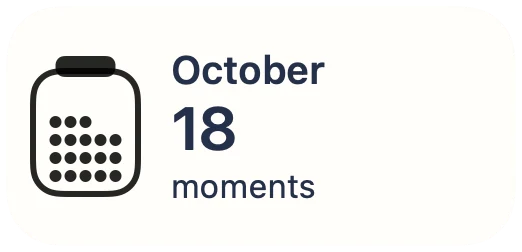
A small reminder of your month, before you open your phone.
A few kind words, close at hand.

For iPhone and iPad